The problem
A small river section that died
A small pond in the Huaihe River Basin was severely covered by filamentous green algae (Spirogyra), emitting a foul odor. There were no signs of life—only empty snail shells. Agricultural waste and pesticide bottles littered the shoreline. Dissolved oxygen levels were low at 6mg/L, and nitrite, phosphorus, and ammonia levels exceeded safety standards.

Our Solution
We cleaned up all pollution sources and manually removed the algae. Then we planted 250 native irises along the pond edge. Dissolved oxygen increased from 6.0 to 9.8 mg/L (Class I standard), nitrite decreased to 0.005 mg/L, total phosphorus to 0.1 mg/L, and ammonia nitrogen to 0.5 mg/L (both reaching Class II standards). Native species returned spontaneously without any restocking. Notably, Spirogyra declined without further removal.
Returned Species

Medaka (native to Huaihe region)
Oryzias sinensis (Chinese medaka) is a small freshwater fish widely distributed across China that serves as a crucial indicator species for environmental health due to its extreme sensitivity to water quality. Its presence reflects a pristine ecosystem. The one in the picture is a juvenile.

Spiny Eel (native to Huaihe region)
Mastacembelus aculeatus (Spiny eel), is a benthic fish that requires clean, oxygen-rich water and complex submerged structures for foraging and shelter. Its natural recolonization of restored water bodies signals the reestablishment of benthic food webs and habitat complexity.

Pouch Snail
As a grazer of periphyton and decomposing organic matter, the pouch snail (Alocinma longicornis) plays a key role in nutrient cycling within freshwater ecosystems. Its natural return to a restored pond signals the reestablishment of lower trophic levels and improved benthic conditions.

Broad-bodied golden leech
Broad-bodied golden leech (Whitmania pigra) is a freshwater leech that inhabits shallow, vegetated waters and feeds primarily on small invertebrates and organic detritus. Its return to a restored ecosystem is a positive indicator of clean sediment conditions and healthy macrophyte cover.

Oriental river prawn
Oriental river prawn (Macrobrachium nipponense) is a small freshwater shrimp that thrives in clean, vegetated waters across China. Its natural return to a restored pond signals a healthy underwater habitat with good water quality and plenty of plant cover for shelter and food.
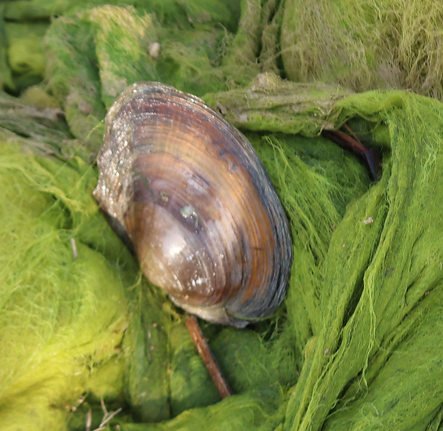
Round-top Freshwater Mussel
Round-top freshwater mussel (Uniondouglasiae) lives buried in clean pond bottoms, filtering water to feed on algae and organic debris. Its return to a restored habitat signals that the ecosystem has recovered enough to support sensitive, long-lived species.